Garage Floor Coatings Explained: Cost, Performance, and Long-Term Value
When homeowners think about getting residential garage floor coatings, the first concern is almost always the cost of it. How much is a garage floor coating going to cost? Is the garage floor coating even worth the investment?
But focusing on price alone often leads to the wrong decision. We think that the real conversation should be cost versus long-term value, especially in places like Sacramento, where heat, UV exposure, and daily wear can quickly expose low-quality garage flooring systems. A garage floor coating is not a paint product. It is a bonded protective system applied to a porous structural substrate.
The real value of that system comes from how it interacts with concrete over time, under load, moisture, heat, and movement. It is actually a functional surface that protects your overall concrete, improves usability, and, when done correctly, adds measurable value to your property.
To properly assess cost versus value, the coating must be evaluated the same way professionals evaluate roofing membranes, waterproofing systems, or industrial floor finishes: by
failure probability, service life, and total lifecycle cost.
Concrete is a living substrate
Concrete is often misunderstood as inert. In reality, it is a dynamic material that continues to move and breathe long after curing. In Sacramento specifically, garage slabs experience:
- Thermal expansion and contraction from hot summers and cooler nights
- Moisture vapor transmission from clay-heavy soils
- Capillary absorption of oil, salts, and chemicals
- Micro-cracking from slab shrinkage and vehicle loads
Any coating applied to concrete must either:
- Accommodate this movement
- Or eventually fail
This is the exact reason why coating chemistry matters more than colour, finish, or initial price.
Epoxy will cost you less
Epoxy coatings are less expensive because of material properties and installation behaviour, not because installers are overcharging for alternatives.
Epoxy is:
- Thermoset and rigid once cured
- Slow-curing (hours to days)
- Highly sensitive to surface moisture
- Prone to UV degradation
- Limited in elongation (flexibility)
In controlled environments, epoxy performs adequately. In garages, especially in climates like Sacramento, it is placed under conditions it was not engineered for.
Common epoxy failure modes include:
- Hot tire pickup where softened epoxy delaminates
- Shear failure as slabs expand and contract
- Moisture-driven blistering
- UV yellowing near doors and windows
These are predictable outcomes of using a rigid coating on a moving substrate. Epoxy’s lower cost reflects its
shorter expected service life under residential garage conditions.
Polyurea systems and their cost + lifespan
Polyurea coatings cost more because they are engineered differently at a molecular level.
Polyurea is:
- Elastomeric after cure
- Capable of significant elongation without cracking
- Extremely fast curing (seconds to minutes)
- Highly resistant to moisture vapor
- UV-stable when paired with appropriate topcoats
The flexibility of polyurea allows it to:
- Move with the slab instead of resisting it
- Absorb impact and vibration
- Maintain adhesion under temperature fluctuations
Polyurea technically behaves less like paint and more like a protective membrane bonded to concrete.
This is why polyurea systems are used in:
- Industrial floors
- Transportation infrastructure
- Commercial facilities with constant load cycles
The cost premium is not cosmetic. It reflects
material performance under stress.
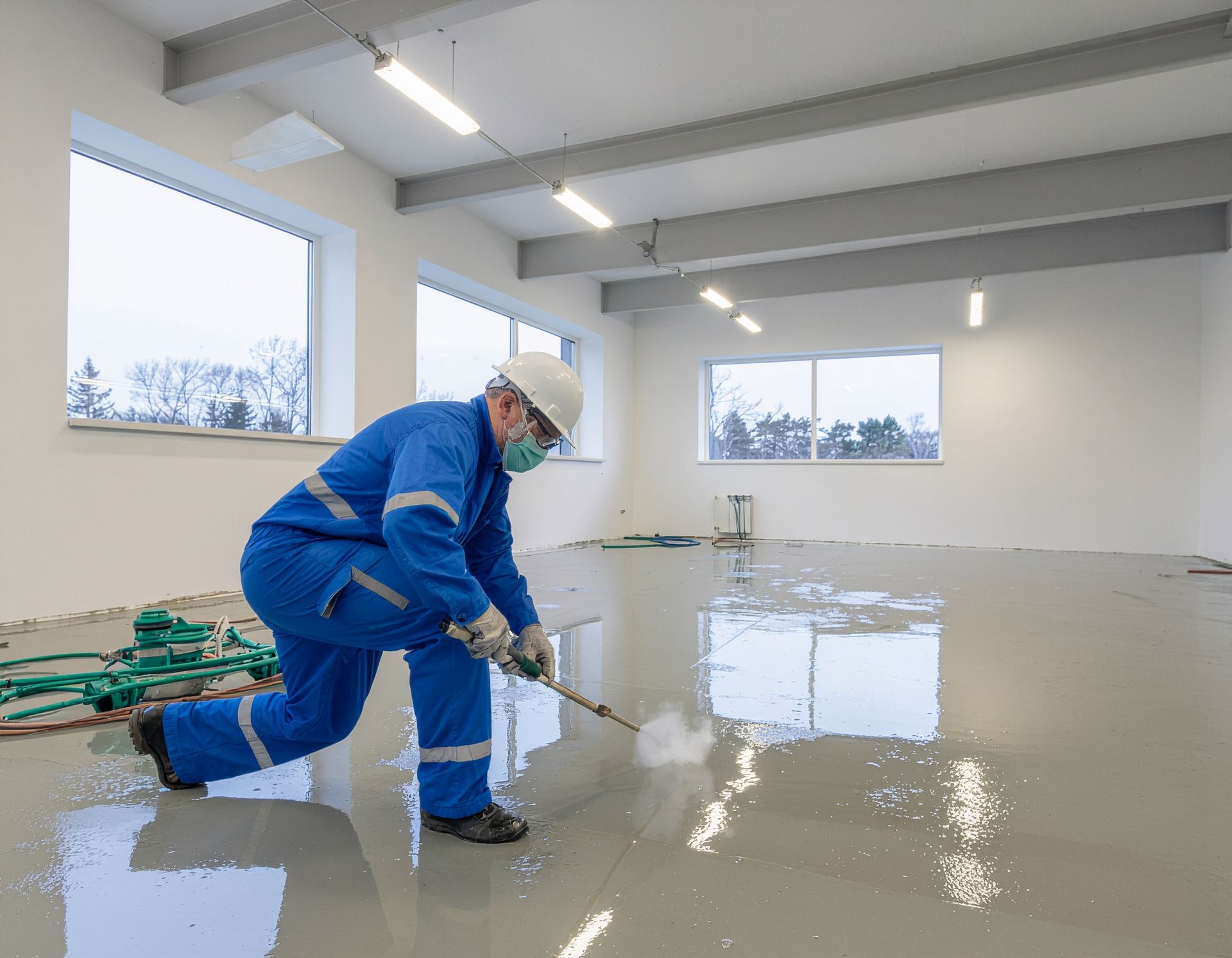
Surface prep is where most value is won or lost
Regardless of coating type, surface preparation determines adhesion quality.
Proper preparation includes:
- Mechanical diamond grinding to open concrete pores
- Removal of contaminants embedded below the surface
- Crack routing and structural repair
- Profile consistency across the slab
- Moisture assessment prior to coating
Acid etching, washing, or “scuffing” does not produce a reliable mechanical bond. These shortcuts reduce cost but dramatically increase failure risk. Professional installers like Top Coat Concrete Coatings invest heavily in preparation because adhesion failures are irreversible once the coating cures. If a coating loses bond, it must be completely removed. There is no partial fix.
Thickness, build, and system design
Not all coatings with the same name are equal.
Low-cost systems often reduce:
- Base coat thickness
- Chip density
- Topcoat solids content
These reductions are invisible to homeowners but directly affect:
- Abrasion resistance
- Impact tolerance
- UV stability
- Chemical resistance
- Slip performance
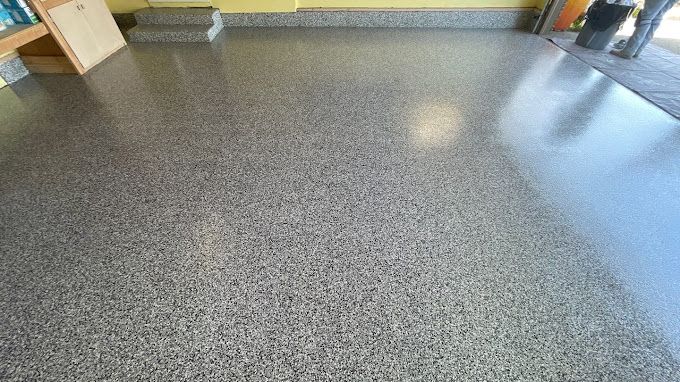
A full broadcast polyurea chip system creates a
mechanically interlocked layer, not just a film on top of concrete. This is why these systems resist peeling and wear far longer than thin-film coatings. Value here is built in layers.
Lifecycle cost
The most accurate way to evaluate cost versus value is cost per year of service.
Example:
- A lower-cost system lasting 4–6 years
- A higher-cost system lasting 15–20 years
Even without publishing numbers, the difference in annualised cost is significant.
More importantly, failure introduces secondary costs:
- Removal
- Downtime
- Reinstallation
- Disruption
A system that does not fail is almost always the least expensive option over time.
What the floor enables
A properly coated garage:
- Eliminates concrete dust
- Resists staining
- Is easy to clean
- Is slip-resistant
- Is visually finished
This transforms the garage from a utility space into a functional extension of the home.
From a value perspective, this:
- Improves daily use
- Reduces maintenance
- Signals quality to future buyers
- Protects the slab long-term
Concrete replacement or structural repair is orders of magnitude more expensive than preventative coating.
Conclusion
A garage floor coating is a system decision, not a purchase decision. If evaluated purely on upfront price, cheaper coatings will always appear attractive. If evaluated on:
- Performance under Sacramento conditions
- Failure probability
- Maintenance burden
- Total lifecycle cost
High-quality polyurea systems installed with disciplined preparation deliver superior value. The real mistake homeowners make is not overpaying. It is
paying twice.
Get Answers From Certified Professionals.
If you’re comparing epoxy, polyurea, or DIY options, a proper on-site evaluation will save you from costly mistakes later. Our Penntek-certified installers inspect moisture levels, slab condition, and prior coatings to determine what will last.